Choosing the best 6 In 1 Beauty Machine requires more than comparing prices or counting treatment heads. A professional device should match your clinic’s services, client needs, staff skills, and safety procedures. It may offer functions such as hydrodermabrasion, oxygen infusion, radio frequency, ultrasonic cleansing, skin scrubber treatment, and cold hammer therapy. However, impressive features do not automatically guarantee effective results.
Dr. Dendy Engelman, a board-certified dermatologist, has emphasized, “Healthy skin is a reflection of overall health.” This principle matters when evaluating any 6 In 1 Beauty Machine. Look for adjustable energy levels, clear operating instructions, replaceable filters, durable handpieces, and documented safety testing. Ask whether the manufacturer provides training, technical support, and a realistic warranty. A machine with attractive lighting and polished packaging may still perform poorly during a busy afternoon.
Small details reveal quality. Check the handpiece seals. Inspect the tubing. Test the control screen. Confirm that cleaning each attachment is practical between appointments. These steps sound ordinary. They prevent expensive mistakes.
A reliable choice should also suit your treatment menu. A compact salon may value simple controls and quick setup. A medical aesthetic clinic may require stronger documentation, deeper customization, and professional oversight. No device can replace qualified assessment or responsible treatment planning. I would also question exaggerated claims, especially promises of permanent transformation. The perfect machine does not exist. The best option is the one your team can operate safely, maintain consistently, and explain honestly to every client.
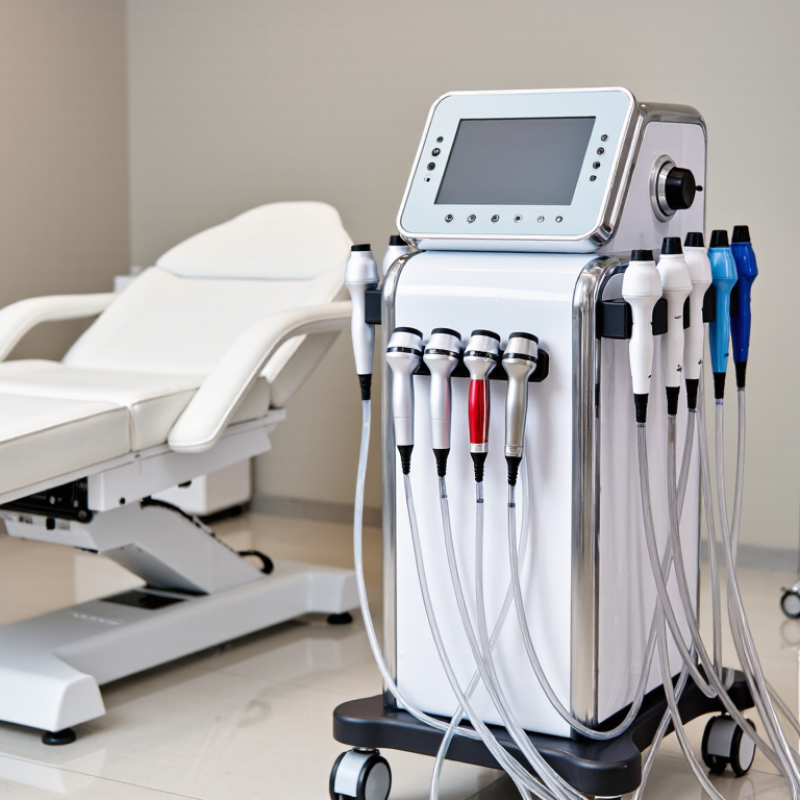
A 6-in-1 beauty machine usually combines cleansing, ultrasonic infusion, galvanic current, high-frequency care, mist spraying, and cooling therapy. However, the exact combination differs between models. Read the technical sheet carefully. “Six functions” can describe six attachments, not six independent technologies.
The cleansing spatula loosens surface debris with ultrasonic vibration. Ultrasonic infusion may help water-based serums spread more evenly. Galvanic current supports product penetration, but it requires suitable formulations and correct polarity. High-frequency electrodes create a mild warming sensation and may support temporary skin freshness. A mist function adds hydration, while a cold hammer can reduce the feeling of heat after treatment. Results vary.
McKinsey & Company’s 2023 beauty report estimated the global beauty market could reach about 580 billion dollars by 2027. The Global Wellness Institute reported a 6.3 trillion-dollar wellness economy in 2023. These figures show strong demand, not guaranteed device performance. In practice, check power levels, timer control, electrode materials, cleaning access, and training requirements. A 10-minute session matters less than consistent, safe operation. Start gently. Avoid using electrical functions on broken or irritated skin, and follow professional guidance for implanted electronic devices or other medical concerns. I would also question dramatic “deep absorption” claims without independent testing. A clear manual, test data, and traceable safety documentation are more valuable than extra lights.
A 6-in-1 beauty machine usually combines cleansing, exfoliation, infusion, skin tightening, light therapy, and soothing functions. The chart shows representative treatment times for each function, helping users compare how each modality may fit into a facial treatment plan. Actual operating times vary according to skin condition, device settings, and professional protocols.
Choosing a 6 in 1 beauty machine should begin with your skin, not its feature list. Examine your main concerns under natural light. Are you managing surface dryness, clogged pores, uneven texture, fine lines, or temporary puffiness? Write down two primary goals. Too many goals can produce an unfocused treatment plan.
Your skin type also matters. Sensitive skin may need gentle cleansing and cooling functions, while congested skin may benefit from controlled exfoliation. If firmness is the goal, energy-based functions require careful settings and trained operation. Ask whether each function has adjustable intensity, clear safety guidance, and suitable attachments. A machine should support your routine, not replace professional judgment. It should also be easy to disinfect between clients.
Consider your treatment timeline. A hydrated appearance may develop quickly, but texture and firmness usually need repeated, consistent care. Take baseline photographs beside a window. Record settings, product used, skin reactions, and recovery time. This creates useful evidence instead of relying on memory. Small details matter.
Do not assume six functions mean six useful treatments. Some may duplicate your needs or remain unused. I would rather choose four well-matched functions than pay for features that encourage unnecessary sessions. Review medical conditions, active irritation, medication use, and recent procedures with a qualified professional before treatment. Skin can react unpredictably. Your plan may need revision.
Choosing the best 6 in 1 beauty machine requires more than counting functions. Compare what each technology actually does. A device may combine cleansing, exfoliation, hydration, microcurrent, radio frequency, and cooling. However, six attachments do not guarantee six useful treatments. Check energy levels, operating modes, treatment depth, and skin-contact materials. Clear controls matter when adjusting intensity around the nose or jawline.
Attachment quality deserves close attention. Look for sealed handles, replaceable tips, comfortable grips, and easy disinfection. A suitable device should include practical guidance for sensitive, dry, oily, and mature skin. Confirm whether electrodes require conductive gel. Check whether vacuum pressure can be adjusted gradually. Excessive suction can leave temporary marks. Cooling probes should feel controlled, not painfully cold. Small details affect real treatment results.
In equipment evaluations, I also review training documents, electrical safety information, and service support. Independent testing is useful, but it should not replace professional judgment.
I once focused too heavily on the number of attachments. That choice was wrong. The machine was impressive, yet two tools were rarely used. Ask how quickly attachments change during a busy appointment.
Measure cleaning time, noise, cable strength, and maintenance costs. Reliable performance matters more than dramatic specifications. When evidence is limited, avoid promising permanent results. Skin responses vary, and careful records help improve future treatments.
How to Choose the Best 6 in 1 Beauty Machine?
A 6 in 1 beauty machine should be judged by safety, not its feature count. Check whether the electrical design follows IEC 60601-1 principles. This standard addresses essential safety and performance for medical electrical equipment. ISO 14971-based risk management is also valuable. It shows that foreseeable hazards were assessed, including burns, shocks, and skin reactions.
Ask for test reports, user instructions, cleaning guidance, and clear contraindications. Do not accept vague “professional grade” claims. Certification alone does not prove every beauty result. The Global Wellness Institute reported that the wellness economy reached about 6.3 trillion dollars in 2023. McKinsey also projected the global beauty market could approach 580 billion dollars by 2027. Fast growth can encourage rushed product decisions. That concerns me.
Tips: Test the controls with clean, dry hands. A readable screen matters. Select adjustable intensity, automatic timers, emergency shutoff, and insulated handles. Check whether attachments lock firmly and can be disinfected without damaging them. Ask how often calibration is required. Compare actual test documents, not only certificates shown in advertisements.
Ease of use affects safety during real treatment sessions. A heavy handpiece may cause fatigue and uneven pressure. Complicated settings can invite mistakes. I once underestimated cable length; it restricted movement and made positioning awkward. That small detail mattered. Look for stable housing, quiet operation, simple icons, and instructions written for ordinary users. If the manual feels confusing, the machine probably is too.
How to Choose the Best 6 in 1 Beauty Machine?
The purchase price is only one part of a six-function beauty machine’s cost. In practice, I compare treatment time, electricity use, replacement parts, and staff training. A cheaper unit may need frequent handpiece replacement. That can quickly change the financial picture. Ask for a clear warranty, service response time, and spare-part pricing before signing an order. Small details matter.
Maintenance should fit your daily workflow. Wipeable surfaces, labeled controls, and removable filters can reduce cleaning time. Check whether each function requires separate calibration or specialist servicing. I also recommend recording repairs, consumable use, and downtime for at least three months. These notes reveal the machine’s real operating cost. They also expose problems that sales demonstrations often miss.
Long-term value depends on reliable performance and suitable client demand. A machine with six functions is not automatically profitable. Review your treatment menu, room capacity, and staff confidence. Test the controls with several users, not only the most experienced operator. My first cost estimate was too optimistic because I ignored training hours. That was a useful mistake. A practical trial should measure setup time, treatment consistency, cleaning effort, and client comfort. Ask for technical documents, safety instructions, and evidence of regulatory compliance in your market. Reliable records support better decisions than impressive specifications.
Practical comparison of typical professional-market configurations. Prices are planning estimates in USD and vary by region, specifications, service coverage, and included accessories.
| Evaluation Factor | Entry-Level Configuration | Mid-Range Configuration | Professional Configuration | What to Check Before Buying |
|---|---|---|---|---|
| Typical purchase price | $1,200–$2,500 | $2,500–$5,000 | $5,000–$10,000+ | Confirm whether handpieces, tips, filters, starter fluids, training, shipping, and taxes are included. |
| Common six-function combination | Hydrodermabrasion, ultrasonic spatula, high frequency, LED, oxygen spray, and hot/cold hammer | Hydrodermabrasion, ultrasonic, radio frequency, LED, oxygen spray, and hot/cold hammer | Hydrodermabrasion, ultrasonic, radio frequency, LED, oxygen or spray infusion, and thermal cooling/warming | Verify the exact technology, operating modes, contraindications, and whether each handpiece is independently controlled. |
| Estimated annual maintenance | $150–$350 | $300–$700 | $600–$1,200 | Budget for cleaning, tubing, seals, filters, electrodes, cooling components, calibration, and preventive service. |
| Consumable cost per treatment | $2–$5 | $3–$8 | $5–$12 | Include disposable tips, serums, gauze, gloves, disinfectant, filters, and single-use accessories. |
| Expected service life | Approximately 2–4 years with regular care | Approximately 3–5 years with regular care | Approximately 5–7 years with regular care | Actual life depends on treatment volume, water quality, cleaning discipline, storage, and availability of replacement parts. |
| Recommended monthly treatment volume | 10–40 treatments | 30–100 treatments | 80–200+ treatments | Choose according to actual demand; excessive capacity increases purchase and maintenance costs without improving returns. |
| Typical treatment time | 45–75 minutes | 40–60 minutes | 30–60 minutes | Compare setup, cleaning, refill, and changeover time—not only the advertised operating time. |
| Warranty target | At least 12 months | 12–24 months | 24 months or longer where available | Check coverage for pumps, RF components, LED modules, displays, handpieces, labor, and return shipping. |
| Training requirement | Basic operator training | Structured device and protocol training | Documented training, safety protocols, and advanced troubleshooting | Training should cover skin assessment, contraindications, treatment parameters, sanitation, and emergency procedures. |
| Approximate power consumption | 100–250 W | 150–400 W | 250–600 W | Electricity is usually a minor cost; confirm voltage, plug type, fuse requirements, and electrical certification. |
| Estimated three-year ownership cost | $2,400–$5,350 | $4,900–$10,700 | $9,200–$19,000 | Estimate: purchase price + three years of maintenance + consumables at approximately 25 treatments per month. |
| Break-even example | About 20–45 treatments | About 30–65 treatments | About 45–100 treatments | Illustration based on a $100 net contribution per treatment, excluding rent, labor, tax, financing, and marketing expenses. |
| Best fit | Home studios, start-ups, and low-volume practices | Established salons and clinics seeking balanced value | High-volume practices requiring durability and lower downtime | Match machine capacity to booked demand, staff skills, local regulations, and available technical support. |
Start with your skin concerns, not the feature list. Choose two main goals, such as dryness and uneven texture. Too many goals create an unfocused routine.
Sensitive skin may need gentle cleansing and cooling. Active irritation, recent procedures, medication use, or medical conditions require professional review. Skin reactions can be unpredictable.
No. Some functions may duplicate your needs or remain unused. Four well-matched functions can be more useful than six poorly selected ones.
Look for adjustable intensity, automatic timers, insulated handles, and emergency shutoff. Attachments should lock firmly and allow safe disinfection. Clear contraindications matter.
Request test reports, user instructions, cleaning guidance, and risk-management information. Check whether the electrical design follows recognized safety principles. Do not rely on vague quality claims.
Test the controls with clean, dry hands. Check screen readability, cable length, handpiece weight, and operating noise. Awkward movement can cause uneven pressure.
Take baseline photographs beside a window. Record settings, products, skin reactions, and recovery time. Hydration may appear quickly, while texture needs repeated care.
Compare replacement parts, electricity, calibration, cleaning time, training, and downtime. Keep repair records for at least three months. Small costs accumulate.
Review client demand, room capacity, staff confidence, and treatment consistency. Test the machine with several operators. My first estimate was too optimistic because training hours were missing.
Revise it when irritation, poor comfort, inconsistent results, or long setup times appear. A machine should support judgment, not replace it. Recheck the evidence.
Choosing the right 6 In 1 Beauty Machine starts with understanding what each function is designed to do, such as cleansing, exfoliation, hydration support, skin soothing, massage, or light-based care. Consider your specific skin concerns and treatment goals before comparing models. A machine should offer practical attachments and technologies that match your routine rather than providing features you may never use. Pay attention to adjustable settings, comfort, operating instructions, and whether the device is suitable for your skin type.
Safety, construction quality, and ease of maintenance are equally important. Look for clear safety guidance, reliable materials, hygienic detachable parts, and simple cleaning procedures. It is also helpful to evaluate the total cost, including accessories, replacement components, energy use, and after-sales support. The best choice is not necessarily the most expensive model, but the one that combines useful functions, safe operation, convenient maintenance, and dependable long-term value for your skincare needs.

Prima Beauty