The beauty industry is investing more carefully in light-based skincare. Grand View Research reported that the global LED light therapy market was valued at approximately USD 1.1 billion in 2023. Its report also projects continued growth through 2030, supported by demand for non-invasive aesthetic treatments. However, market figures vary between research firms because product categories are not always defined consistently. That detail matters.
A Beauty Salon Led Light Therapy Machine should be judged beyond its appearance or advertised color modes. Salon owners need to examine wavelength accuracy, irradiance, treatment coverage, timer controls, eye protection, cleaning design, and manufacturer support. A bright panel may look impressive in a treatment room, yet brightness alone does not prove performance. Ask for independent testing, technical specifications, warranty terms, and documented safety information. The FDA explains that cleared devices are evaluated for specific intended uses, not unlimited cosmetic claims.
Professional practice also depends on daily usability. Can staff position the machine without disturbing a client’s makeup or hair? Is the fan quiet enough for a relaxing session? Can the surface be disinfected quickly between appointments? These small details become important after hundreds of treatments. IEC 62471 guidance can help buyers consider photobiological safety, while ISO 13485 certification may indicate stronger quality-management processes. Certification is useful, but it is not a substitute for careful verification.
This guide presents seven practical tips for choosing a reliable salon device. Some decisions remain imperfect. Budget, space, client needs, and supplier evidence must be balanced realistically. A thoughtful purchase protects service quality, customer trust, and long-term operating costs.
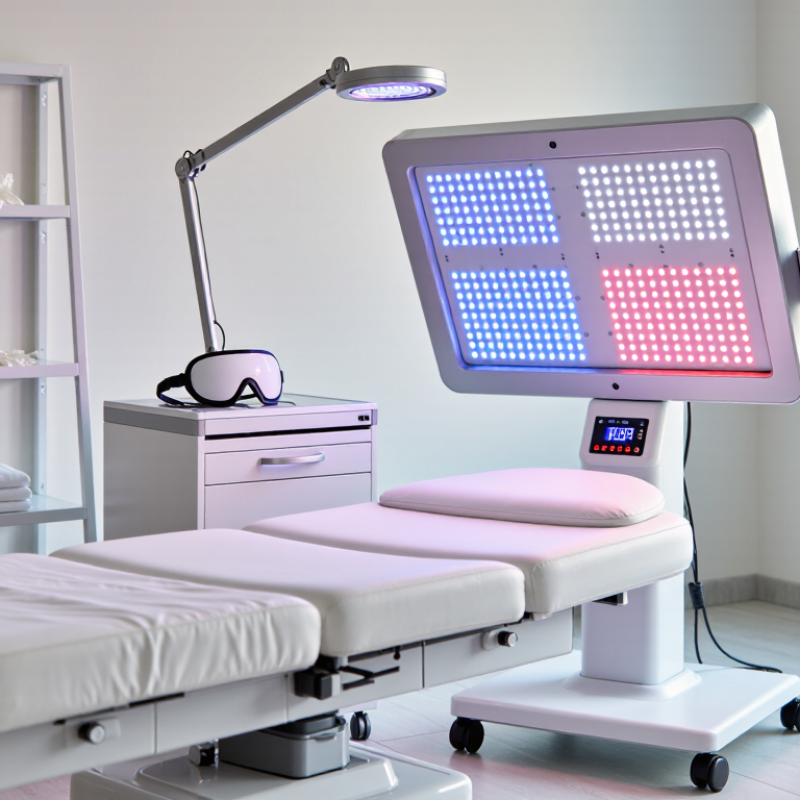
Before choosing a beauty salon LED light therapy machine, define the treatment goal clearly. Clients may want support for uneven-looking tone, temporary redness, or a calmer post-facial appearance. Some want relaxation and maintenance. Others expect dramatic changes in a week. That expectation needs careful discussion.
Ask about each client’s skin history, sensitivity, current products, and previous light treatments. Observe the treatment area under consistent lighting. Record the client’s concern, comfort level, and desired result. A machine should offer adjustable intensity, suitable treatment modes, a reliable timer, and comfortable eye protection. Wavelength information matters, but it should be supported by clear technical data. Do not select equipment based only on attractive photos or impressive promises.
My early mistake was focusing too much on the device and too little on the consultation. The machine looked professional, but its fixed settings did not suit every client. That experience changed my checklist. I now compare operating instructions, cleaning requirements, staff training, and maintenance support. The salon should also explain realistic timelines and possible limitations. Keep treatment records and review progress with clients regularly. Small details matter. A warm surface, a noisy fan, or complicated controls can reduce trust. A thoughtful choice connects the machine’s capabilities with real client needs, not with temporary marketing excitement.
Tip: Compare wavelengths by purpose, not by color alone. Red light commonly ranges from 620 to 660 nanometers and supports routine skin-care treatments. Near-infrared wavelengths, often around 810 to 850 nanometers, reach deeper tissue. Blue light uses shorter wavelengths and may suit selected blemish-focused protocols. Ask for measured wavelength data, not vague terms like “full spectrum.” Skin responds differently. That matters.
Tip: Check energy output carefully. Irradiance is measured in milliwatts per square centimeter, while fluence is measured in joules per square centimeter. A device with strong output may require less treatment time, but higher intensity is not automatically better. Confirm the recommended distance, session length, and heat control. In salon evaluations, I would request independent testing records. Marketing brightness can mislead.
Tip: Inspect treatment coverage and light uniformity. A small mask may illuminate the cheeks but miss the jawline. A larger panel can cover the face, neck, or shoulders, yet uneven spacing may create untreated areas. Look for diagrams showing beam distribution at the working distance. I once assumed more LEDs meant better coverage. I was wrong. Comfortable positioning, eye protection, cleaning access, and clear operating instructions also influence consistent service quality.
Verify the safety documentation before judging brightness or design. IEC 62471 divides photobiological risk into four groups, from exempt to higher-risk categories. Ask for the machine’s risk-group assessment, irradiance data, treatment distance, and built-in timer. A timer matters because longer exposure does not automatically produce better skin results. The FDA’s MAUDE database contains device incident reports, but these reports cannot calculate true complication rates. Missing reports are not proof of safety.
Check whether certification applies to the exact model, not merely the manufacturer’s product family. Request electrical safety testing, electromagnetic compatibility results, and clear user instructions. ISO 10993 is relevant when materials contact skin, especially around the face. I would also inspect cables, cooling vents, emergency shutoff functions, and protective eyewear. Small details become important during busy salon hours.
Skin compatibility needs equal attention. The American Academy of Dermatology notes that visible-light treatments can cause temporary redness, dryness, or discomfort in some users. Blue light may also concern clients using light-sensitive medicines. Ask clients about photosensitivity, eye conditions, recent procedures, and active skin irritation. Patch testing is sensible, although it cannot predict every reaction. I still ask twice. Salon staff should record wavelength, energy density, session length, and client response. Clinical evidence remains uneven, and treatment protocols vary widely. That uncertainty deserves honest communication, not confident promises.
Choosing a beauty salon LED light therapy machine requires more than checking light settings. In daily use, a clear control panel matters. Staff should adjust treatment time without searching through complicated menus. A stable stand and comfortable treatment distance also reduce awkward positioning. Test the machine during a busy salon period. Quiet operation helps clients relax.
Hygiene should be visible and practical. Choose smooth surfaces that staff can wipe between clients. Removable protective shields are useful when cleaning around the face area. Ask whether the manufacturer provides cleaning instructions and compatible disinfectants. Avoid equipment with deep seams or exposed cables. These details often become difficult after months of use. Keep disposable barriers available, but do not treat them as a substitute for proper cleaning.
Maintenance and training deserve equal attention. Request a written inspection schedule for cables, panels, timers, and cooling systems. Staff should learn eye protection, contraindication screening, emergency shutdown, and accurate recordkeeping. Training should include supervised practice, not only a short video. A checklist is helpful, yet it can still miss real-world problems. I would observe a complete treatment before purchasing. Ask staff to explain each step in plain language. If they cannot, the machine may be too complex for consistent service. Document faults immediately, and never continue using equipment that behaves unpredictably.
| Tip | Evaluation Dimension | What to Check | Practical Acceptance Criteria | Evidence to Request | Suggested Weight |
|---|---|---|---|---|---|
| 1 | Confirm treatment usability | Review controls, display readability, timer settings, positioning, and emergency shut-off access. | A trained operator can start, pause, adjust, and end a session without leaving the client unattended. The timer should provide clear start and end signals. | Live demonstration, user manual, control-panel photographs, and operator feedback. | 15% |
| 2 | Verify light-output documentation | Check wavelength information, irradiance or power-density data, treatment distance, and output consistency. | The supplier provides test conditions, measurement units, tolerances, and instructions for maintaining the recommended treatment distance. Avoid relying only on LED count or brightness. | Technical data sheet, factory test report, calibration information, and written operating instructions. | 15% |
| 3 | Assess hygiene and cleanability | Inspect surfaces, seams, vents, cables, headrests, eye protection, and areas that may collect oil or product residue. | Smooth, non-porous, wipeable surfaces should be accessible. The device should tolerate the cleaning products and contact times specified by its manufacturer. | Cleaning and disinfection instructions, material compatibility list, and a sample cleaning checklist. | 20% |
| 4 | Check infection-control workflow | Determine how staff clean between clients and how single-use or reusable accessories are managed. | Cleaning responsibilities, product names or specifications, wet contact time, storage, and documentation should be clearly defined before the next appointment. | Written salon protocol, completed daily log, disposable-accessory policy, and staff demonstration. | 15% |
| 5 | Evaluate maintenance requirements | Review filter access, cable condition, fan or vent cleaning, software updates, inspection intervals, and replacement parts. | Routine tasks should be documented with clear intervals. Staff should be able to identify overheating, flickering, damaged cables, unusual noise, or timer failure and remove the unit from service when necessary. | Maintenance schedule, troubleshooting guide, spare-parts list, service response terms, and inspection records. | 15% |
| 6 | Plan staff training and client screening | Confirm training for operation, eye protection, contraindication screening, incident response, and client instructions. | Every operator should complete documented training and demonstrate correct setup, cleaning, session control, and escalation procedures. Client records should include relevant product, medication, and skin-sensitivity questions. | Training materials, attendance records, competency checklist, screening form, and incident-report template. | 15% |
| 7 | Review electrical and operational safety | Check power requirements, plugs, grounding, heat management, stability, cable routing, and protective eyewear instructions. | The unit should be used only with the specified power supply and environment. Cables must be protected from trip hazards, and safety warnings should be visible and understandable. | Electrical specifications, safety instructions, risk assessment, inspection log, and local regulatory documentation where applicable. | 5% |
| Total Evaluation Weight | 100% | ||||
When choosing a beauty salon LED light therapy machine, price should never stand alone. A low quote may exclude protective eyewear, replacement panels, staff training, or delivery. Ask for a written cost breakdown. Compare the total cost over three years, not only the invoice. In salon equipment reviews, I check treatment coverage, power settings, cleaning needs, and expected service intervals. These details affect daily profit. A machine that saves ten minutes per session can matter more than a small discount. Still, advertised efficiency is not proof. Request test data and realistic treatment guidance.
Warranty terms deserve close reading. Confirm its length, parts coverage, labor coverage, and shipping responsibility. Some warranties sound generous but exclude LEDs, cables, hinges, or damage from frequent cleaning. Ask whether a technician can diagnose faults remotely. Keep invoices, serial records, and maintenance logs. They may protect a legitimate claim. A two-year warranty is useful only when support responds within working days. Get that promise in writing. Also ask about replacement-part availability after the warranty ends. A discontinued controller can leave an otherwise sound unit unusable.
After-sales support should fit your schedule, not merely exist on a website. Before purchasing, send practical questions and observe the reply. Is it specific, patient, and technically clear? Ask for training materials, setup videos, sanitation instructions, and a contact route for urgent problems. Speak with other salon owners when possible. Their experience often reveals hidden delays. I would also budget for repairs, even with coverage. Optimism is not a maintenance plan. Review the return policy, installation requirements, and local service options before signing. Your staff and clients meet the machine every day.
Compare wavelengths by purpose, not color alone. Red light often ranges from 620 to 660 nanometers. Near-infrared light commonly ranges from 810 to 850 nanometers. It may reach deeper tissue. Blue light uses shorter wavelengths for selected blemish-focused protocols. Ask for measured data. “Full spectrum” sounds useful, but it can be vague.
Check irradiance in milliwatts per square centimeter. Also check fluence in joules per square centimeter. Stronger output may shorten sessions. Higher intensity is not automatically better. Confirm distance, session length, and heat control. Brightness can mislead.
Review beam-distribution diagrams at the working distance. A small mask may miss the jawline. A larger panel may cover the face, neck, or shoulders. Uneven LED spacing can leave untreated areas. More LEDs do not guarantee better coverage. I once assumed that. I was wrong.
Request risk-group assessments, irradiance data, treatment distance, and timer settings. Confirm electrical and electromagnetic safety testing for the exact model. Inspect cables, cooling vents, emergency shutoff features, and protective eyewear. Clear instructions matter during busy hours. Small details matter.
Ask about photosensitivity, eye conditions, recent procedures, and active irritation. Some clients may experience temporary redness, dryness, or discomfort. Certain medicines can increase light sensitivity. Consider a patch test, but it cannot predict every reaction. Record wavelength, energy density, session length, and client response.
Request a written cost breakdown. Include eyewear, replacement panels, training, delivery, cleaning, and service intervals. Compare expected costs over three years. A ten-minute time saving may matter more than a small discount. Advertised efficiency still needs test data.
Confirm warranty length, covered parts, labor, and shipping responsibility. Check whether LEDs, cables, hinges, or cleaning damage are excluded. Ask about remote fault diagnosis and replacement parts after coverage ends. Keep invoices, serial records, and maintenance logs. A warranty is only useful when support responds.
Send practical questions before purchasing. Notice whether replies are specific, patient, and technically clear. Request training materials, setup videos, sanitation instructions, and urgent contact options. Ask other salon owners about delays. I would budget for repairs anyway. Optimism is not a maintenance plan.
Choosing the right Beauty Salon Led Light Therapy Machine requires more than comparing appearance or price. Start by defining your treatment goals and understanding your clients’ skin concerns, comfort preferences, and expected results. Then compare LED wavelengths, energy output, treatment coverage, and session flexibility to ensure the machine fits your salon’s services. Safety should also be a priority, so review built-in protection features, relevant certifications, operating guidelines, and compatibility with different skin types.
A practical machine should be easy for staff to operate, simple to clean, and supported by clear training materials. Consider how often components require maintenance and whether the design supports efficient hygiene between appointments. Finally, evaluate the total investment, including pricing, warranty terms, replacement parts, technical assistance, and after-sales support. A well-chosen device should provide reliable performance, improve the client experience, and support your salon’s long-term service quality.

Prima Beauty