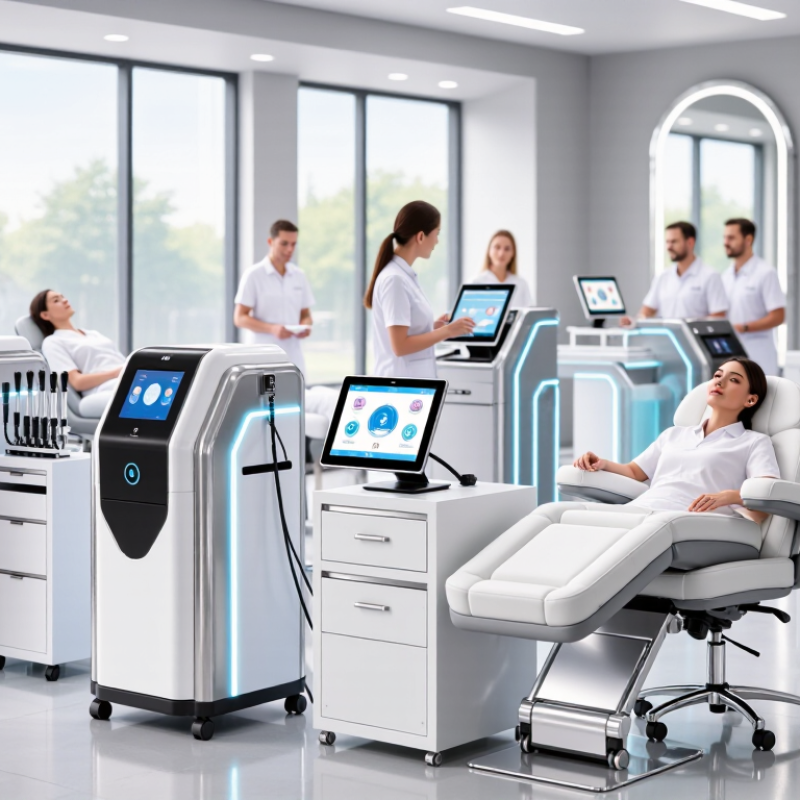
Choosing the right Beauty Salon Machines can shape your salon’s safety, service quality, and long-term reputation. A sleek device may attract attention, but appearance alone proves very little. Experienced salon owners examine performance, treatment goals, staff training, and client comfort before making a purchase.
This guide presents ten practical tips for evaluating professional equipment. It considers machine functions, energy settings, hygiene design, warranty support, maintenance needs, and supplier credibility. You will also find questions worth asking before signing an order. Can your team operate the device confidently? Are replacement parts easy to obtain? Does the machine suit your clients’ skin types and treatment expectations?
Small details matter. A clear display helps during busy appointments. Easy-to-clean handpieces reduce hygiene risks. Reliable cooling can make a treatment feel more comfortable. Still, no machine is perfect. Some advanced models require more training than expected, while cheaper equipment may create hidden service costs. I have seen buyers focus on impressive features and overlook daily usability.
That mistake is understandable.
A responsible purchase should balance innovation with evidence, practicality, and professional judgment. Always review manufacturer instructions and follow appropriate safety procedures. Ask qualified professionals to assess the equipment before use. Your salon does not need the most expensive machine. It needs dependable technology that supports consistent results, protects clients, and fits your actual business capacity.
Choosing a salon machine begins with the treatment goal, not its screen size or price. IPL uses filtered, broad-spectrum light, commonly covering 500–1,200 nm. Shorter filters may target superficial pigment, while longer wavelengths reach deeper vascular structures. However, IPL is not a laser. Its energy spreads across several wavelengths, so filter selection, pulse duration, fluence, and cooling all matter.
Match the wavelength to the clinical purpose. A 755 nm laser is often selected for melanin-rich targets and fine hair. An 810 nm diode wavelength commonly supports hair reduction across varied body areas. A 1,064 nm Nd:YAG wavelength penetrates deeper and may suit selected vascular or hair treatments, particularly when epidermal melanin requires more caution. For resurfacing, wavelengths around 2,940 nm act strongly on water-rich tissue and require advanced training. Skin assessment must come first.
The market is expanding quickly. Grand View Research estimates the global aesthetic lasers market will grow at about 11% annually through 2030. ISAPS reported more than 19 million nonsurgical aesthetic procedures worldwide in its 2023 survey. Demand is real, but equipment choice still needs restraint. Ask for wavelength specifications, calibrated output records, cooling performance, and operator training evidence. A machine offering every setting may sound impressive. It may also encourage unsuitable treatments. Patch testing, documented consent, and realistic treatment intervals remain essential. Even experienced operators can misjudge pigment response under bright salon lighting. Good purchasing decisions leave room for that uncomfortable possibility.
Use the treatment objective, target chromophore, wavelength, skin response, and operational requirements together when comparing salon equipment.
| Tip | Treatment Goal | Suitable Technology | Typical Wavelength or Range | Primary Target | Common Professional Applications | Selection Considerations | Important Safety Points |
|---|---|---|---|---|---|---|---|
| 1 | Hair reduction | Intense Pulsed Light (IPL) or long-pulsed laser | IPL: filtered 500–1,200 nm Laser: approximately 755, 808–810, or 1,064 nm |
Melanin in the hair shaft and follicle | Progressive reduction of unwanted hair on suitable skin and hair combinations | Choose adjustable filters, pulse duration, fluence, cooling, and spot size. Darker or recently tanned skin generally requires more conservative settings and professional assessment. | Perform a consultation and patch test according to the device protocol. Avoid treating over tattoos and follow eye-protection requirements. |
| 2 | Vascular appearance reduction | IPL or vascular laser | IPL: commonly filtered around 530–590 nm Laser: approximately 532 or pulsed-dye wavelengths around 585–595 nm |
Oxyhemoglobin and deoxygenated hemoglobin | Selected superficial redness, telangiectatic vessels, and diffuse facial erythema | Look for precise pulse control, cooling, and suitable vascular filters. The device should distinguish vascular targets from surrounding tissue as far as technically possible. | Screen for photosensitizing medicines and conditions that affect healing. Do not treat suspicious, changing, or undiagnosed lesions. |
| 3 | Sun spots and benign pigmentation appearance | IPL or pigment-targeting laser | IPL: commonly filtered around 515–560 nm Laser: approximately 532 or 755 nm |
Melanin | Appearance improvement of selected superficial solar lentigines and freckles after professional evaluation | Use a platform with accurate energy delivery and cooling. Shorter wavelengths are more strongly absorbed by melanin but may carry a higher risk of unwanted pigment changes in darker skin tones. | Obtain a medical-quality assessment of pigmented lesions before treatment. Strict sun protection is essential before and after procedures. |
| 4 | Acne-associated redness and inflammatory appearance | IPL or selected visible-light systems | IPL: commonly filtered around 400–600 nm or device-specific acne filters | Porphyrins, hemoglobin, and superficial inflammatory components | Adjunctive cosmetic care for selected acne-prone skin and post-inflammatory redness | Check whether the system is specifically cleared or designed for acne-related applications. Adjustable fluence and cooling can improve comfort and treatment control. | Review photosensitizing medication use and active skin conditions. Avoid treating open wounds or severe inflammatory lesions without appropriate clinical oversight. |
| 5 | Fine lines and texture improvement | Non-ablative fractional laser or IPL photorejuvenation | IPL: commonly 500–1,200 nm with selected filters Laser: approximately 1,320, 1,440, or 1,550 nm |
Water in the skin and, for IPL, additional pigment or vascular targets | Improvement in the appearance of mild photoaging, uneven texture, and fine lines | Choose based on downtime, treatment depth, spot size, scanning pattern, and cooling. Fractional delivery usually limits the treated area per pass and may support controlled recovery. | Set realistic expectations. Follow strict aftercare, including gentle cleansing, moisturization, and broad-spectrum sunscreen use. |
| 6 | Resurfacing and scar-texture refinement | Fractional ablative or non-ablative laser | Ablative: approximately 2,940 or 10,600 nm Non-ablative: approximately 1,550 nm |
Water in the epidermis and dermis | Selected acne-scar texture, uneven surface, and photodamage appearance | Ablative wavelengths remove or vaporize tissue and generally involve more downtime; non-ablative systems heat tissue with less surface disruption. Select according to the desired depth and recovery period. | Use only with appropriate training, infection-control procedures, plume management, and eye protection. Ablative treatments may require clinical supervision depending on local regulations. |
| 7 | Tattoo pigment lightening | Q-switched or picosecond laser | Commonly approximately 532, 694, 755, or 1,064 nm | Specific tattoo pigments selected by their optical absorption | Progressive lightening of selected professional or cosmetic tattoo pigments | Wavelength must match the pigment color. Pulse duration, spot size, repetition rate, and cooling affect treatment response and risk. Multiple sessions are normally required. | Use appropriate laser-rated eyewear and plume protection. Screen for pigment composition, paradoxical darkening risk, scarring history, and post-treatment healing needs. |
| 8 | Skin tightening appearance | Non-ablative infrared laser or radiofrequency system | Laser examples: approximately 1,320, 1,440, or 1,550 nm Radiofrequency: does not use optical wavelength |
Water-containing dermal tissue or tissue impedance, depending on technology | Temporary improvement in the appearance of mild laxity and skin firmness | Do not compare radiofrequency and laser only by wavelength. Evaluate penetration depth, temperature monitoring, contact cooling, treatment uniformity, and practitioner control. | Avoid treatment over implanted electronic devices when contraindicated. Monitor skin temperature and stop if excessive pain, blanching, or overheating occurs. |
| 9 | Overall photorejuvenation | Multi-filter IPL | Broad spectrum, often covering approximately 500–1,200 nm through selected filters | Melanin, hemoglobin, and water, depending on the filter and settings | Combined cosmetic treatment of selected uneven pigmentation, superficial redness, and photoaging signs | Prioritize replaceable filters, stable output, integrated cooling, adjustable pulse sequencing, and a clear skin-type treatment protocol. A broad range does not mean every wavelength is delivered equally. | Confirm the actual emitted spectrum and filter cut-on wavelength in the technical documentation. Patch test and use conservative settings for higher-risk skin types. |
| 10 | Operational fit and treatment consistency | IPL, diode laser, Nd:YAG, fractional laser, or a multi-technology platform | Select according to the target: approximately 532–10,600 nm for laser systems; 500–1,200 nm for filtered IPL | Target-specific chromophore: melanin, hemoglobin, water, or tattoo pigment | Building a treatment menu that matches staff training, client demand, room setup, and expected recovery time | Compare spot size, repetition rate, pulse duration, fluence range, cooling, handpiece ergonomics, consumables, maintenance, and documented performance—not just the wavelength label. | Verify local regulatory requirements, operator training, emergency procedures, protective eyewear, servicing records, and written contraindication screening before purchase or use. |
Note: Wavelength ranges and applications are typical technical references, not a treatment prescription. Actual performance depends on the device design, filter characteristics, pulse parameters, skin type, target depth, operator training, and applicable local regulations.
A polished screen does not prove safe construction. Check insulation, grounding, maintenance records, and applicable electrical safety requirements. The documents should match the machine in front of you.
Confirm the exact model, model suffix, electrical configuration, and current standard edition. Ask which requirements apply to that device. A generic PDF is not enough.
No. It mainly reflects the manufacturer’s processes. Check design controls, traceability, risk management, and corrective actions. Verify the certificate number, issuer, scope, and validity dates independently.
Search the official database using the model, applicant, and intended use. Confirm that the listed details match your machine exactly. A clearance usually supports a stated comparison, not every possible salon application.
Keep installation reports, training records, electrical inspection results, and service history together. Record repairs and recurring alarms. Paperwork gets messy.
Record wattage, daily operating hours, and your local electricity rate. Multiply usage by the rate, then estimate monthly consumption. Small differences matter after hundreds of treatments.
Include cartridges, cooling gels, filters, tips, disinfectants, protective covers, maintenance, and training. Calculate the cost per session. Also check replacement intervals and delivery times.
Estimate realistic monthly revenue, then subtract electricity, supplies, maintenance, training, and other operating costs. Divide the initial investment by monthly net profit. Review the estimate after three months of real use, including slower seasons. My first calculation missed training hours.
Choosing the right Beauty Salon Machines requires more than comparing prices or appearance. Begin by defining your treatment goals and confirming that the device’s IPL range, such as 500–1,200 nm, or its laser wavelengths match the services you plan to offer. Review key specifications, including fluence, pulse width, cooling performance, and spot size, because these factors influence treatment efficiency, comfort, and suitability for different clients. Safety should also be a priority, so verify relevant documentation such as IEC 60601 and ISO 13485 compliance, along with any applicable FDA 510(k) status.
A complete purchasing decision should include the machine’s total cost of ownership. Consider energy consumption, consumables, warranty coverage, expected return on investment, and possible maintenance expenses. Finally, evaluate usability and long-term support by comparing training requirements, operating uptime, service response times, software updates, and repair terms. A well-supported machine can improve workflow, client satisfaction, and business reliability.

 Prima Beauty