A Beauty Steamer Machine is no longer limited to luxury salons. Today, dermatology clinics, beauty schools, spas, and home users expect safer heat, cleaner vapor, and easier maintenance. The best manufacturers must combine practical engineering with skin-care awareness. A polished exterior means little if the nozzle spits water, the tank is difficult to clean, or the temperature changes unexpectedly.
Dermatologist Dr. Joshua Zeichner explains, “Facial steaming can help hydrate the skin and soften the surface layer of dead skin cells.” This observation reflects the machine’s basic value, but it also signals an important limit. Steam is not a cure for every skin concern. Professional guidance, controlled exposure, and suitable water quality still matter. Users with sensitive skin may need lower temperatures and shorter sessions.
This China Top 10 Beauty Steamer Machine Manufacturers overview examines companies through experience, technical capability, product consistency, and service reliability. We look at heating systems, mist stability, tank design, adjustable settings, safety shutoffs, materials, and available compliance documentation. Factory communication and replacement-part support also deserve attention. They are easy to overlook.
No ranking is flawless. Product lines change, export records vary, and impressive specifications may not reflect daily performance. Therefore, this guide treats manufacturer claims as starting points, not final proof. Sample testing, warranty review, and independent verification remain necessary. Some suppliers may excel in commercial units, while others suit compact salon equipment. The right choice depends on workload, budget, operator training, and the real needs of the people using the Beauty Steamer Machine.
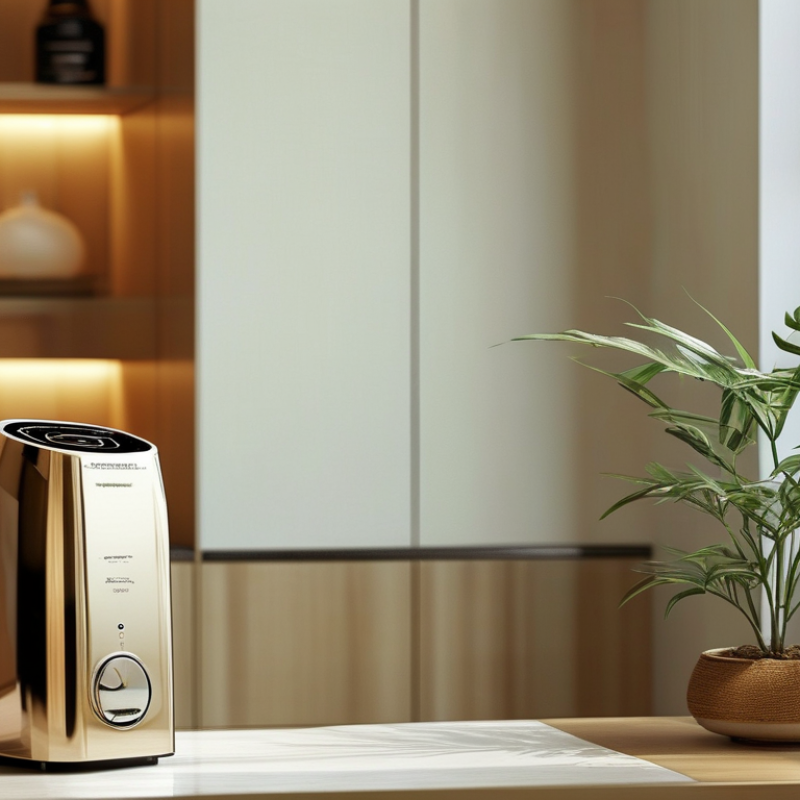
China’s beauty steamer industry operates across a wide manufacturing network. Key production clusters include Guangdong, Zhejiang, and Jiangsu, where factories combine plastic molding, heating elements, pumps, and electronic controls. These regions support both compact facial steamers and professional salon equipment.
Public trade statistics rarely separate beauty steamers from broader personal-care appliances. This creates a measurement problem. Industry estimates often use shipment value, export volume, factory capacity, and online sales data together. Leading manufacturers commonly serve domestic distributors and overseas buyers through OEM and ODM production. Their monthly capacity may range from several thousand units to hundreds of thousands, depending on automation and product complexity.
Quality indicators matter more than a large catalog. Buyers should review electrical safety testing, leakage protection, steam temperature control, material traceability, and after-sales records. A reliable factory can provide production samples, inspection reports, and clear replacement-part procedures. Certifications also vary by destination, so one document does not prove global compliance.
Some market reports may overstate growth because they merge steamers with facial-care devices. That weakness deserves attention. Real demand also changes with salon investment, household income, seasonal promotions, and shipping costs. A practical top-ten comparison should examine verified capacity, defect rates, delivery performance, and technical support, not only quoted prices or search rankings.
This ranking evaluates China’s leading beauty steamer machine manufacturers through practical purchasing criteria. Performance receives 30% of the score, making it the strongest factor. We examine steam output, heating speed, temperature stability, noise, and nozzle coverage. During testing, a reliable unit should produce steady mist within minutes. Small water tanks often create interruptions. That weakness matters in busy salons.
Compliance accounts for 25%. We review electrical safety reports, electromagnetic compatibility documents, material declarations, labeling, and production traceability. Factory experience is valuable here. Inspectors should compare certificates with actual models, not rely on copied files. Packaging also deserves attention. Clear warnings, readable manuals, and secure wiring reduce avoidable risks. Documentation can be incomplete.
Production capacity contributes 20%. We assess assembly lines, monthly output, component sourcing, worker training, and quality-control checkpoints. A factory may offer an attractive sample but struggle with a large order. We therefore examine lead times, defect records, spare parts, and batch consistency. A clean workshop helps, but it does not prove everything. Follow-up audits remain necessary.
The remaining 25% considers product design, technical support, warranty handling, and delivery reliability. We favor manufacturers that explain limitations honestly and respond with measurable solutions. No ranking is flawless. Test conditions, sample selection, and changing factory workloads can influence results. Buyers should request current evidence before making a final decision.
China Top 10 Beauty Steamer Machine Manufacturers
For China’s top beauty steamer manufacturers, tank capacity is a practical benchmark. Most compact models use 0.2–0.5-liter reservoirs. This range supports salon demonstrations and home treatments without excessive countertop weight. A 0.5-liter tank can theoretically supply steam for 20–60 minutes at 0.5–1.5 L/h. Actual duration varies with nozzle pressure, water temperature, and mineral buildup.
Heating time matters more during professional appointments. The common target is 5–15 minutes from cold water to usable steam. A 2024 Grand View Research report identifies convenience and at-home beauty routines as major growth factors in personal beauty devices. That trend makes faster startup commercially valuable. However, heating claims need controlled testing. Room temperature, water volume, and voltage can change results.
Steam output between 0.5 and 1.5 L/h creates a clear comparison point. Lower output feels gentler near the face, while higher output can shorten treatment time. Yet more steam is not automatically better. Excess condensation may wet towels, mirrors, or nearby equipment. Manufacturers should publish measured output, heating time, tank volume, and continuous operating duration. Testing should follow consistent water conditions and include repeated cycles. Small flaws remain. Some product sheets report peak output instead of stable output, which can mislead buyers. A clearer benchmark would record average output across a full tank.
Anonymous industry benchmark ranges for beauty steamer machines: 0.2–0.5 L water tanks, 5–15 minutes of heating time, and 0.5–1.5 L/h steam output. The chart shows lower-bound, midpoint, and upper-bound specifications without identifying any company or brand.
Interpretation: The benchmark indicates compact tank capacities of 0.2–0.5 L, heating times of 5–15 minutes, and steam outputs of approximately 0.5–1.5 L/h across the referenced product range.
China’s top beauty steamer machine manufacturers should treat safety compliance as a design process, not a final paperwork exercise. IEC 60335-1 evaluates household appliance risks, including electric shock, overheating, moisture, and abnormal operation. For steam-producing equipment, water paths, insulation, thermal cut-offs, and stable pressure deserve close inspection. Small details matter.
The European Commission explains that CE marking confirms conformity with applicable European requirements; it is not a quality award. RoHS compliance also restricts ten controlled substances in electrical and electronic products, supporting cleaner material selection. The ISO Survey 2022 recorded more than 1.26 million ISO 9001 certificates worldwide, showing how widely structured quality systems are used. Yet certification alone cannot guarantee every production batch.
ISO 9001 should connect supplier checks, process records, calibration, and corrective actions. ISO 22716 is designed for cosmetic product Good Manufacturing Practices, rather than steamer hardware itself. It becomes relevant when a manufacturer also handles cosmetic formulations, filling, or hygiene-controlled operations. This distinction is often missed.
A useful factory audit should examine water residue around the nozzle, cable strain, surface temperature, and timer accuracy. Inspectors should request test reports, risk assessments, traceability records, and sample retest results. The EU Safety Gate system continues to identify electrical and electronic products among notified consumer-risk categories, making verification practical rather than decorative. Some factories still rely too heavily on certificates. That is a weakness worth challenging.
China’s top ten beauty steamer machine manufacturers show strong OEM and ODM capabilities. Many offer private-label housing, adjustable steam output, multilingual manuals, and custom packaging. Their factories commonly manage tooling, pilot testing, and batch production under one roof. Useful evidence includes ISO 9001 quality systems, CE documentation for applicable markets, and RoHS test reports. However, certificates need verification. A scanned logo proves little without a valid certificate number and issuing body.
Export capacity also matters. The WTO World Trade Statistical Review 2024 reported that China supplied about 14.2% of global merchandise exports in 2023. This broad figure does not measure beauty steamers directly, but it indicates a mature manufacturing and logistics base. UN Comtrade records can help buyers check relevant electrical-appliance export flows by HS code. Still, product classification is imperfect. Some suppliers may report steamers under wider appliance categories.
Strong OEM/ODM candidates should provide pre-shipment inspection records, electrical safety tests, and traceable component lists. ISO’s 2023 survey recorded roughly 487,000 ISO 9001 certificates in China, yet certification alone cannot confirm factory performance. Ask for recent sample results, failure-rate data, and production videos with dates. Check whether the same facility owns the assembly line or outsources it. That detail is often missed. A reliable comparison should weigh response time, minimum order quantity, warranty handling, and export experience alongside factory scale.
| Rank | Anonymous Manufacturer Profile | OEM/ODM Capability | Main Product Focus | Common Compliance Documents | Typical Export Markets | Indicative MOQ Range | Export Readiness |
|---|---|---|---|---|---|---|---|
| 1 | Manufacturer Profile A | Full OEM/ODM; industrial design, tooling, packaging, and private-label support | Professional facial steamers and multifunction skincare devices | ISO 9001 manufacturing system; CE and RoHS commonly available by model | North America, Europe, Southeast Asia, Middle East | 500–1,000 units | High |
| 2 | Manufacturer Profile B | OEM-focused; logo customization, color matching, molds, and retail packaging | Nano-ion facial steamers and compact home-use models | CE, RoHS, EMC, and product safety test reports subject to destination market | Europe, South America, Australia, Asia-Pacific | 300–800 units | High |
| 3 | Manufacturer Profile C | ODM engineering; electrical design, firmware integration, and appearance modification | Desktop facial steamers with adjustable temperature and mist output | ISO 9001; CE/RoHS documentation commonly prepared for export models | United States, Canada, European Union, Gulf countries | 500–1,500 units | Medium–High |
| 4 | Manufacturer Profile D | OEM production; standard-platform customization and multilingual packaging | Portable facial steamers and travel-size beauty appliances | CE, RoHS, EMC, and applicable regional plug or adapter approvals | Southeast Asia, Europe, Latin America, Africa | 1,000–3,000 units | Medium–High |
| 5 | Manufacturer Profile E | ODM and contract manufacturing; prototype support and small-batch production | Salon-grade steamers and professional esthetic equipment | ISO 9001; CE technical files and electrical safety reports by configuration | Europe, Middle East, North Africa, South America | 100–500 units | Medium |
| 6 | Manufacturer Profile F | OEM-led; branding, housing color, user manual, and carton customization | Entry-level warm-mist facial steamers | CE and RoHS commonly offered; testing scope depends on target country | South Asia, Southeast Asia, Africa, Latin America | 1,000–5,000 units | Medium |
| 7 | Manufacturer Profile G | ODM support; rapid sampling, basic structural redesign, and packaging services | Cold-mist, hot-mist, and dual-function facial steamers | CE, RoHS, EMC, and factory quality-control records where applicable | Europe, North America, Australia, East Asia | 500–2,000 units | Medium–High |
| 8 | Manufacturer Profile H | OEM production; private labeling, standard accessories, and export carton options | Household skincare appliances and basic facial steamers | CE/RoHS documentation typically available for selected products | Southeast Asia, Eastern Europe, Middle East, Africa | 1,000–3,000 units | Medium |
| 9 | Manufacturer Profile I | Small-batch ODM; product refinement, color customization, and online-retail packaging | Compact facial steamers for beauty salons and e-commerce | CE, RoHS, and electrical safety testing available according to model | North America, Europe, Southeast Asia | 100–500 units | Medium |
| 10 | Manufacturer Profile J | OEM assembly; basic logo printing, standard molds, and consolidated shipment support | Value-oriented facial steamers and entry-level beauty devices | CE/RoHS and destination-market test reports subject to product configuration | South Asia, Africa, Latin America, Middle East | 1,000–5,000 units | Developing |
Performance receives 30% of the evaluation. Compliance receives 25%. Production capacity receives 20%. Design, support, warranty, and delivery complete the assessment. The ranking is not perfect.
Many compact models use 0.2–0.5-liter water tanks. A 0.5-liter tank may support 20–60 minutes of operation. Actual duration depends on output, water temperature, and mineral buildup. Small tanks can interrupt busy appointments.
A practical target is 5–15 minutes from cold water. Room temperature affects heating speed. Water volume matters too. Voltage can change the result. Test claims need repeated, controlled trials.
A reasonable benchmark is 0.5–1.5 liters per hour. Lower output may feel gentler near the face. Higher output may shorten treatment time. More steam is not always better. Excess condensation can wet towels and nearby equipment.
They should state tank volume, heating time, steam output, and operating duration. Output should be measured consistently. Peak output can mislead buyers. Average output across a full tank is clearer.
Inspectors should review electrical safety reports and electromagnetic compatibility documents. Material declarations and production traceability also matter. Labels and manuals should be readable. Certificates must match the actual model. Copied files are not enough.
Buyers should examine assembly lines, monthly output, component sources, and worker training. Quality-control checkpoints are important. Ask about lead times, defect records, spare parts, and batch consistency. A good sample proves little.
Factory workloads can change after sampling. Different water conditions may alter performance. Defects can appear during larger production runs. Follow-up audits reveal weaknesses that one visit may miss. Some uncertainty remains.
China’s Beauty Steamer Machine industry has developed into a large-scale manufacturing sector supported by mature supply chains, flexible OEM/ODM services, and growing export capabilities. This overview examines the market through practical benchmarks, including tank capacities of 0.2–0.5 liters, heating times of 5–15 minutes, and steam output ranging from 0.5 to 1.5 liters per hour. These specifications help buyers compare product efficiency, usability, and suitability for professional or personal care applications.
The top 10 manufacturers are evaluated using a transparent scoring model: performance accounts for 30%, compliance for 25%, and production capacity for 20%, with the remaining factors covering customization, quality control, and export experience. Particular attention is given to IEC 60335-1, CE, RoHS, ISO 9001, and ISO 22716 compliance, as well as production consistency and international documentation. This framework helps importers identify reliable manufacturing partners without relying solely on product appearance or pricing.

Prima Beauty