What Is the Top Radio Frequency Beauty Machine in 2026?

Time:2026-10-14 Author:Oliver
0%

What Is the Top Radio Frequency Beauty Machine in 2026? This question deserves more than a glossy ranking. Buyers now compare electrode design, temperature control, energy delivery, clinical evidence, and after-sales training. A warm handpiece may feel impressive, but feeling heat does not prove meaningful tissue response.

Market data shows why this category continues expanding. Grand View Research valued the global medical aesthetics market at approximately USD 18.5 billion in 2023. Its report forecasts strong growth through 2030, supported by non-surgical treatments and improved device technology. Fortune Business Insights also projects sustained expansion, although its market estimate differs. These differences matter. Market reports use different definitions, regions, and product categories. They should guide research, not replace it.

Dermatologist and laser specialist Dr. David J. Goldberg has described radiofrequency as “color blind.” That characteristic can support treatment across diverse skin tones, unlike some light-based technologies. However, it does not remove clinical responsibility. Device settings, cooling systems, operator training, and patient assessment still influence outcomes. The best Radio Frequency Beauty Machine is not automatically the strongest machine. It is the one that delivers controlled energy, measurable consistency, and appropriate comfort for its intended use. Small details matter. A stable display, clean applicator, and documented calibration can affect daily practice. Some marketing claims remain difficult to verify. That should make buyers pause, not rush. This guide examines leading systems through evidence, usability, safety features, and real-world performance.
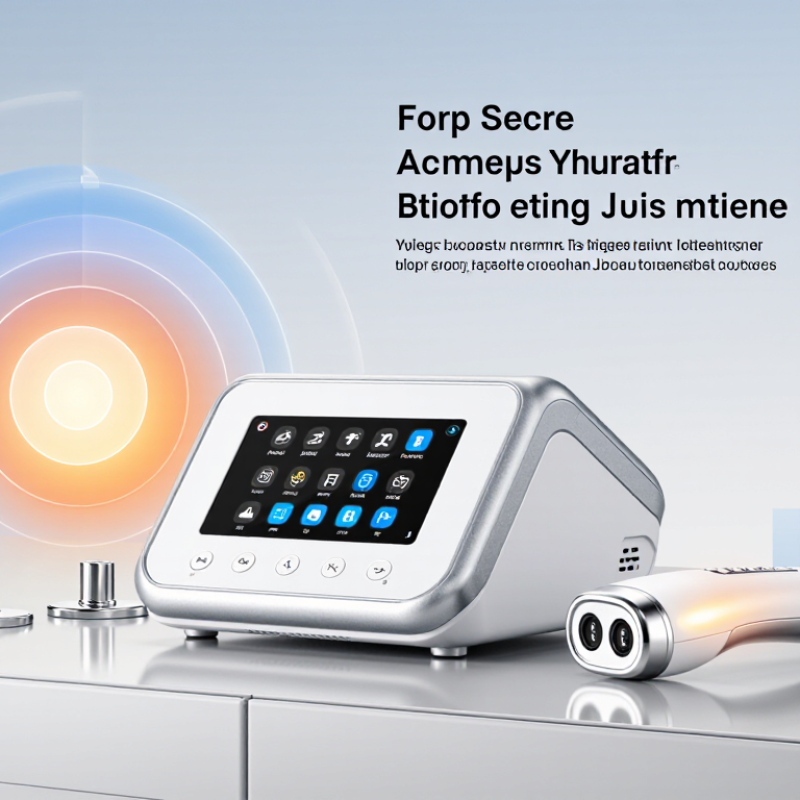
What Is the Top Radio Frequency Beauty Machine in 2026?

What Is RF Beauty Technology? 0.5–3 MHz Energy and 40–43°C Skin Heating

What Is the Top Radio Frequency Beauty Machine in 2026?

The strongest RF beauty machine is not defined by frequency alone. It should deliver stable 0.5–3 MHz energy, controlled contact, and even skin heating. This range transfers electromagnetic energy into tissue, producing gradual thermal stimulation rather than surface burning. During professional use, skin temperature commonly targets 40–43°C. At this level, collagen fibers may contract, while fibroblast activity can support longer-term skin remodeling.

Temperature control matters more than impressive power figures. A 2023 review in the Journal of Cosmetic Dermatology linked controlled RF heating with improvements in skin laxity and texture, although outcomes varied by device design and treatment protocol. The review also emphasized monitoring temperature and avoiding excessive exposure. Small differences matter.

Market demand is expanding. Grand View Research projected the global medical aesthetics market to grow at about 11.6% annually through 2030. The 2023 ISAPS Global Survey recorded approximately 20.5 million nonsurgical aesthetic procedures worldwide. These figures show strong interest, but they do not prove that every RF machine performs equally well. The uncomfortable truth is that frequency labels can distract buyers from energy consistency, cooling, sensor accuracy, and operator training.

In practical treatment rooms, a top 2026 system should show real-time temperature feedback and adjustable delivery. It should feel warm, not painfully hot. Skin type, hydration, and treatment area still change the result. More power is not automatically better. Sometimes, it is simply less controlled.

How Do Monopolar, Bipolar, and Multipolar RF Technologies Differ?

What Is the Top Radio Frequency Beauty Machine in 2026?

The word “top” is imperfect here. The best radio frequency machine depends on treatment goals, skin condition, comfort, and operator training. RF energy warms deeper tissue and may support collagen remodeling. Results usually develop gradually, not overnight. Patient assessment remains essential.

Monopolar RF sends energy from one active electrode toward a grounding pad. It can reach deeper tissue and may suit broader tightening treatments. Bipolar RF travels between two electrodes on the handpiece. Its energy stays more localized, often creating a controlled and comfortable treatment zone. Multipolar RF uses three or more electrodes. This design can distribute heat more evenly across the surface and shallow layers. Small treatment areas may feel warmer than expected.

Clinical evidence supports thermal stimulation, but outcomes vary between devices and individuals. Temperature control, contact quality, pulse duration, and cooling can matter as much as the RF category. Trained providers should monitor skin response throughout treatment. Very high heat is not automatically better. That assumption needs questioning. A person with sensitive skin, implanted electronic devices, reduced sensation, or certain medical conditions may need professional clearance or another option. Clear consent, realistic photographs, and documented settings improve reliability. Even with careful technique, results can be uneven. That is normal.

Which 2026 RF Machine Combines 1–2 MHz Depth With Thermal Control?

What Is the Top Radio Frequency Beauty Machine in 2026?

The strongest 2026 RF candidate is a professional system combining 1–2 MHz output with closed-loop thermal control. Frequency alone does not guarantee treatment depth. Electrode geometry, impedance, power density, and tissue contact also influence energy distribution. A useful machine should display skin temperature continuously, adjust power automatically, and pause when heat rises too quickly. That matters near the jawline, where uneven contact can create hot spots. Keep cooling active. A 40–42°C surface target is commonly discussed for controlled dermal heating, but settings should follow clinical protocols and skin response.

Demand supports stricter evaluation. The ISAPS Global Survey 2023 recorded about 19.1 million nonsurgical aesthetic procedures worldwide, a 40.9% increase from 2022. Fortune Business Insights also projects continued expansion in the global aesthetic medicine market through 2030. These figures indicate interest, not proof that every RF platform works equally well. Look for independent testing, calibrated temperature sensors, treatment logs, and published safety data. Ask whether the 1–2 MHz specification describes selectable operating bands or only a marketing range. That distinction is easy to miss. In practice, the better machine may be the less dramatic one: stable energy, visible feedback, and repeatable contact. Some operators still rely too heavily on preset programs. That deserves reconsideration.

What Professional Data Supports RF Results After 8–12 Weeks?

In 2026, the top radio frequency beauty machine should be judged by clinical evidence, not dramatic before-and-after images. Professional studies commonly evaluate RF results after eight to twelve weeks. This period allows collagen remodeling to develop gradually. Immediate skin tightening may reflect temporary tissue contraction, while later changes are more meaningful.

Reliable studies use standardized photography, skin elasticity devices, ultrasound imaging, and independent clinical grading. Some also include blinded assessors and patient questionnaires. Results often show modest improvements in firmness, fine lines, and skin texture after several treatments. Treatment schedules vary, but many protocols use sessions spaced one to four weeks apart. Consistent energy delivery matters. So does temperature monitoring.

The evidence is useful, but not flawless. Many studies include small groups, short follow-up periods, or different RF settings. That makes direct comparisons difficult. Real skin is messier. Age, sun exposure, sleep, hormonal changes, and skincare habits can influence the outcome. A professional evaluation should record baseline images and use the same lighting later. It should also explain realistic limits before treatment. Stronger claims need stronger data, including longer follow-up and transparent adverse-event reporting. Eight to twelve weeks can reveal visible progress, but it cannot prove permanent lifting.

What Is the Top Radio Frequency Beauty Machine in 2026?

Professional Evidence of RF Results After 8–12 Weeks

This evidence-informed comparison summarizes improvement ranges reported in professional radio-frequency facial rejuvenation studies. Results vary according to energy level, treatment protocol, treatment area, baseline skin condition, and assessment method. The findings support gradual changes in skin firmness, elasticity, and wrinkle appearance during the 8–12 week period rather than a direct ranking of any specific device.

Evidence context: peer-reviewed clinical literature on non-invasive RF skin tightening and facial rejuvenation, including studies by Fitzpatrick et al., El-Domyati et al., and related clinical reviews. Percentages represent approximate reported improvement ranges synthesized across differing protocols and should not be interpreted as head-to-head device performance.

How Should Buyers Compare RF Power, Cooling, Safety, and ROI?

The top radio frequency beauty machine in 2026 is not simply the device with the highest wattage. Buyers should examine delivered energy, treatment depth, pulse control, and temperature stability. A powerful system can feel impressive, yet uneven heating may reduce comfort and consistency. Numbers can mislead.

During a practical evaluation, record skin temperature before, during, and after treatment. Reliable systems often maintain a controlled range rather than creating sudden heat spikes. Cooling deserves equal attention. Contact cooling, airflow, or chilled tips can protect the surface while RF energy reaches deeper tissue. Ask whether cooling works continuously or only between pulses. That small detail affects both safety and treatment speed. Operators should also check emergency shutoff functions, insulation, calibration records, and training requirements. Independent testing and clear technical documentation carry more weight than attractive demonstrations.

ROI requires more than counting treatments per week. Compare purchase cost, consumables, maintenance, staff training, treatment time, and expected client retention. A slower machine may become expensive if it occupies a room for long sessions. However, the fastest option may not deliver better outcomes. I have found that real-world workflow often exposes weaknesses missed during showroom trials. No scorecard is perfect. Buyers should test the handpiece on different skin types, review published clinical evidence, and speak with experienced operators. Some assumptions will need revision after three months of actual use.

What Is the Top Radio Frequency Beauty Machine in 2026? - How Should Buyers Compare RF Power, Cooling, Safety, and ROI?

RF Machine Category Typical Frequency Typical Output Range* Energy Delivery Cooling Requirements Key Safety Controls Typical Treatment Use Indicative Session Time ROI Considerations
Monopolar RF Commonly around 0.5–1 MHz Approximately 50–250 W, depending on applicator and pulse mode Energy passes through a larger tissue volume between the active electrode and return path Active surface cooling or chilled contact is strongly recommended for comfort and epidermal protection Temperature monitoring, impedance feedback, timed delivery, emergency stop, and controlled contact pressure Non-invasive skin tightening and treatment of laxity over larger areas 30–60 minutes High coverage per session; evaluate cooling performance, consumables, training, and electrical installation requirements
Bipolar RF Commonly around 1–2 MHz Approximately 10–100 W Current flows between two electrodes in a more localized treatment zone Integrated contact cooling is useful, particularly at higher energy levels Real-time skin-temperature sensing, automatic energy adjustment, contact detection, and preset limits Facial tightening, fine lines, and localized contouring 20–45 minutes Often suitable for frequent facial treatments; compare handpiece durability and the cost of replacement tips
Multipolar RF Commonly around 0.5–2 MHz Approximately 20–150 W Multiple electrodes distribute RF energy across a superficial to mid-depth treatment area Built-in cooling or temperature-controlled contact improves comfort and treatment consistency Thermal sensors, preset temperature ceilings, skin-contact sensing, and automatic shutoff Face, neck, body contouring, and cellulite-oriented protocols 30–60 minutes Versatile for clinics with mixed demand; assess whether one platform can support multiple billable protocols
Fractional Microneedling RF Commonly around 1–2 MHz Often specified by pulse energy, commonly about 5–100 mJ per pin rather than total watts Insulated or non-insulated needles deliver RF at a selected dermal depth Optional contact cooling may reduce discomfort; sterile single-use needle cartridges are essential Adjustable needle depth, insertion sensing, pulse control, cartridge recognition, and insulated delivery options Acne scars, texture, fine lines, pores, and selected tightening protocols 30–60 minutes, excluding topical anesthetic time Potentially higher revenue per treatment, but include cartridge cost, clinical training, downtime management, and infection-control procedures
RF + Vacuum Platform Commonly around 0.5–2 MHz Approximately 20–120 W for the RF section; vacuum is specified separately by pressure range RF heating is combined with mechanical tissue mobilization and suction Cooling remains important because vacuum can increase local warmth and sensitivity Vacuum pressure control, temperature feedback, contact sensing, gradual ramp-up, and emergency release Body contouring, temporary skin-smoothing programs, and larger treatment zones 30–75 minutes Good for body-focused menus; compare service intervals, pump maintenance, filters, and operator time
How buyers should compare RF power: Wattage alone does not determine clinical performance. Request measured output specifications, treatment temperature range, energy uniformity, pulse duration, applicator area, and calibration records. A higher stated power can increase heat-up speed but may also increase discomfort and thermal risk without adequate monitoring and cooling.
Practical 2026 buying checklist: Prioritize temperature feedback, automatic energy regulation, reliable contact detection, documented electrical safety certification, clear contraindications, operator training, warranty coverage, service availability, consumable costs, and measurable utilization targets.
*The specifications shown are representative industry ranges for comparison, not guaranteed values for every device. Actual output depends on system design, applicator size, operating mode, tissue impedance, and local regulatory requirements. Clinical use should follow the applicable medical-device regulations and the manufacturer’s validated instructions.

FAQS

What makes an RF beauty machine a strong choice in 2026?

A strong system may combine 1–2 MHz output with closed-loop temperature control. Frequency alone does not prove treatment depth. Electrode design, contact, impedance, and power density also matter.

Does a 1–2 MHz specification guarantee deeper treatment?

No. Ask whether 1–2 MHz means selectable bands or only a marketing range. That difference is easy to miss. Tissue contact and electrode geometry can change energy distribution.

How should temperature control be evaluated?

Choose equipment that displays skin temperature continuously. It should adjust power automatically when heat changes. A pause function helps when temperature rises too quickly. Keep cooling active.

What surface temperature range is commonly discussed?

A surface target around 40–42°C is commonly discussed for controlled dermal heating. Settings must follow clinical protocols and skin response. Do not treat one number as universally suitable.

Why is cooling important during RF treatments?

Cooling helps protect the surface while RF energy reaches deeper tissue. It may use contact cooling, airflow, or chilled tips. Ask whether cooling operates continuously or only between pulses.

Which safety features should buyers inspect?

Check emergency shutoff functions, insulation, calibration records, and treatment logs. Temperature sensors should be calibrated. Clear technical documents matter more than attractive demonstrations.

How can buyers compare RF power and treatment quality?

Do not choose by wattage alone. Review delivered energy, pulse control, treatment depth, and temperature stability. Sudden heat spikes may reduce comfort and consistency. Numbers can mislead.

How should return on investment be calculated?

Include purchase cost, consumables, maintenance, training, treatment time, and client retention. A slow machine can occupy a room too long. The fastest option may still perform poorly.

What should happen during a practical machine trial?

Record skin temperature before, during, and after treatment. Test the handpiece on different skin types. Observe contact near the jawline, where hot spots may appear. Test it properly.

Should preset programs be trusted without review?

Presets can support workflow, but operators may rely on them too heavily. Review actual treatment results and patient responses. My assumptions might change after three months of use.

Conclusion

This guide explores what makes a Radio Frequency Beauty Machine effective in 2026, beginning with the fundamentals of RF technology. It explains how 0.5–3 MHz energy can warm targeted skin layers to approximately 40–43°C, supporting a controlled approach to skin tightening and texture improvement. It also compares monopolar, bipolar, and multipolar systems, highlighting differences in penetration depth, energy distribution, treatment comfort, and application suitability.

The article then examines how a 1–2 MHz platform may balance deeper energy delivery with thermal monitoring and cooling. It reviews the professional evidence commonly used to evaluate visible changes over 8–12 weeks, while emphasizing realistic expectations and consistent treatment protocols. Finally, buyers will learn how to compare RF power, temperature control, cooling performance, safety features, usability, maintenance, and long-term return on investment when selecting equipment for professional aesthetic practice.

Oliver

Oliver

Oliver is a seasoned marketing professional with a wealth of expertise in driving brand awareness and engagement. With a deep understanding of our company's product offerings, he consistently delivers high-quality content that enriches our professional blog. His insights not only shed light on......